The weather is finally turning, which means more time outside and fewer walls between my kids and any bad decisions they might make, like kicking a soccer ball into the dining room chandelier.
Over the weekend, I took them to a new park with an obstacle course. It did not take long to spot the different parenting styles on display there. One mom stayed close, repeating “be careful” as her child climbed. He paused to wave, lost focus, and fell. Not far, not hard. He was fine.
Another parent, watching the same thing, told me she used to think the course was too dangerous. Then she remembered something her grandfather told her: if you get hurt, you either learn not to do it again or you learn to do it better.
That is where my mind shifted to markets.
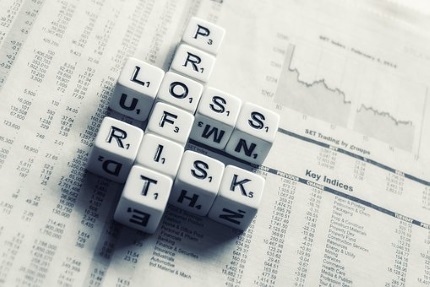
Everyone approaches risk differently. At the playground, it shows up as hovering or stepping back. In trading, it shows up as hesitation, overreaction, or avoidance altogether.
The traders who struggle the most are not the ones who take calculated risks. They are the ones who resist risk entirely. They look for someone to blame when things move against them. The market, the Federal Reserve, the news cycle. Anything but their own positioning. That mindset does not leave much room for improvement.
Risk is not a flaw in the system. It is the system.
Trying to eliminate it is the fastest way to stay on the sidelines, or worse, to act emotionally when exposure becomes unavoidable.
The traders who last understand something simpler. You do not control the environment. You control your response to it.
When conditions shift, you adjust. When risk expands beyond what you are willing to hold, you step back. When it contracts, you step in again. There is no need to predict every move. There is a need to recognize when the odds have shifted.
This is where discipline replaces emotion.
Each trade stands on its own. It is not tied to the last outcome or the next idea. It is evaluated based on current conditions, current risk, and a defined plan. That separation matters more than most people realize. It prevents one decision from contaminating the next.
The goal is not to avoid losses. It is to prevent losses from compounding.
Small losses are part of the process. So are small gains. Over time, they build in the same way experience builds on that playground. Through repetition, adjustment, and a better understanding of where the real risks are.
There are strategies built for longer time frames, just like there are parenting styles built around more control. Both can work.
But the approach I rely on is more adaptive: step in when the environment supports it. Step out when it does not. Let conditions—not opinions—dictate exposure.
The obstacle course does not change. The way you move through it does.
I will admit, having my own indicator helps. It does not remove risk, but it does make it easier to see when conditions are shifting and when it makes sense to move.
You only need five funds to collect $322 a day, Monday through Friday
I created the first ever ETF portfolio to deliver $322 daily cash flow, Monday through Friday. That’s $6,440 a month… or $83,720 a year in extra income. Watch my new briefing to start getting paid every week.