
Crude oil is produced in many parts of the world, but the easy-to-find, low-cost Persian Gulf oil has enabled that region to capture 20% of the global oil market. And the war against Iran has shone a light on the Strait of Hormuz as a choke point that could cut off a large share of the global oil supply.

Much of the Persian Gulf oil exits the region on tankers through the strait —which Iran has been able to effectively close as a result of the current war, trapping a large portion of the world’s oil supply in the Persian Gulf.
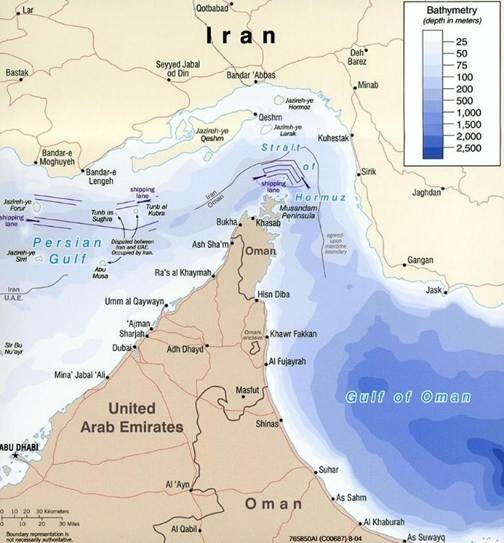
Source: https://en.wikipedia.org/wiki/Strait_of_Hormuz
Countries dependent on Gulf oil are already feeling the shortage. Fuel rationing and energy use reduction orders are in effect in many regions, especially the Asian countries that get the bulk of their oil from the Persian Gulf countries. https://www.bbc.com/news/articles/cjr9yr73xyeo
Currently, experts predict it will take three to six months (or so I heard on CNBC) for oil exports to reach pre-war levels. That time frame starts after the strait is fully reopened.
I think the long-term effect of the Persian Gulf oil shut-in will be countries looking for oil sources less prone to disruption.
The Wall Street Journal recently published an article titled “Big Oil Plows Billions Into Far-Flung Drilling Sites to Escape Iran Turmoil.” The article highlighted companies like Exxon Mobil (XOM), Chevron (CVX) Shell (SHEL), BP, plc (BP) and TotalEnergies (TTE) discussing the various parts of the world where these companies are committing growth capital.
As an investor, you can buy shares in each or all of these companies. Recently, I added an ETF to the Dividend Hunter portfolio that offers exposure to these stocks, combined with an option strategy and an attractive distribution yield.
The top three holdings in the Westwood Salient Enhanced Energy Income ETF (WEEI), which account for 45% of the fund, are Exxon, Chevron, and ConocoPhillips. Using a covered call strategy, WEEI provides investment exposure to a portfolio of energy companies and pays an 11% yield with monthly dividends.
Why You Don’t Need Anything Close to $1.5 Million to Retire
Financial advisors say you need $1.5M to generate $5,000/month. A revolutionary new investment does it with potentially $150,000... even less in some cases. Kelly G: "I updated my spreadsheet and it seems illegal. The income keeps growing." Transform non-dividend stocks like Apple and Tesla into monthly income machines. Bloomberg reports they're "entering a golden era." Simple as buying a stock. Watch the presentation that shows you all of the steps, click here.