


7 Stocks to Sell on Insider Activity
— Bret Jensen, Editor, Blue Chip Gems
On December 27, 2001 media celebrity Martha Stewart made what some might call the biggest mistake of her life. It was a decision that affected not only her but practically every CEO and board member of a publicly traded company and even retail investors.
When faced with the possibility of heavy losses from a from her stake in a biotech company with its main drug rejected by the FDA Martha Stewart committed an act that has come define her almost as clearly as her celebrity homemaker status.

According the U.S. Securities and Exchange Commission’s initial investigation she’d committed what we commonly call insider trading. She’d sold her shares in a company called ImClone just one day before the failed FDA trials were publicly announced. Her sell decision was based on information about insider selling by the company’s CEO, Sam Waksal, information that she’d come to illegally via her broker.
Had she waited until after the announcement she’d have suffered a loss equal to just 0.007% of her entire net worth and moved on. Instead, she lost a whole lot more.
According to Forbes Magazine, just six months prior to her fateful decision on December 27, 2001 Ms. Stewart’s net worth was estimated at $700 million. Her career was on the ascent and her sterling reputation had the potential to be worth even more in the coming years with ever more books, magazines, television shows, DVDs, speaking engagements, syndication, merchandising, and brand licensing arrangements.
Instead, based on a tip from then Merrill Lynch broker Peter Bacanovic that ImClone CEO Sam Waksal was dumping $5 million in his own shares of the company as well as his daughters’ full holdings in company stock, Stewart sold her entire $230,000 stake.
An error in judgment that would come back to haunt her when SEC investigators made a connection between Waksal’s sales – a very obvious case of insider trading – and Stewart’s personal connection to Waksal, though it was a tip from a Bacanovic fellow employee that really got the ball rolling.
A year and a half later Stewart was indicted on security fraud charges even though those weren’t even what eventually sent her to prison for five months, then under home confinement for five months, and two years’ probation. Afterward the SEC continued to pursue her until in 2006 she settled, paying a fine of $195,000 and agreeing to step down as director of her own company for five years.
And although she has since made a comeback it’s often debated how much further along her media empire might be if she’d just taken the miniscule loss in her portfolio or just not lied to the Feds when questioned about the trade.
Had Sam Waksal waited just one day later — after public release of the FDA trials, nothing would have happened. And Martha Stewart would have avoided negative publicity, incarceration, financial penalties, and reputation damage had she decided to follow the law and accept the loss of $45,673 when the ImClone share price dropped on news of the failed FDA trials.
Insider selling when fully disclosed and executed per SEC regulation is perfectly legal and one of the best signals investors can use to make decisions about their own holdings in certain stocks.
And of course, insider buying is a strong indicator in management’s belief in the future of a company. Indeed, S&P Capital IQ has done some work on insider trading and found that CEOs are the best bellwethers.
There’s been a lot of media focus lately on macroeconomic trends like the strong U.S. dollar, the price of oil, global economy, politics, even the Chinese stock market when it comes to trying to explain current market volatility. Looking at the market a macro perspective is useful, but sometimes investors can miss the simple signals that can be your most powerful tools.
One such signal is insider trading, not the illegal kind like with Sam Waksal and to a lesser extent Martha Stewart, rather the buying and selling that company owners do.
After digging deep into the current trends of insider trading, it wasn’t the recent insider buys that stood out to me, but the insider sales.
Now, rushing for the exits because a handful of insiders are selling is never a prudent strategy. Its true Insiders have the proverbial inside track, they also have financial obligations to meet, as well as the fact that some simply want to diversify beyond just their employer’s stock.
So, in a lot of cases, using insider sales is harder than insider buys. But, I have done my due diligence and picked out insider sales by the right type of insiders that have all the typical warning signs flashing.
Here are my thoughts on this. One, CEOs are at the top of the company food chain and should know the most about the company. And two, there’s the fact that more investors and other employees are likely to follow the CEO rather than a lower level executive.
Thus, I looked for big transactions by employees higher up the management chain. And, the more employees selling, the more interesting the insider trading trends are. With all that in mind, here are seven stocks that insiders have been dumping of late:
 No. 1 Stock Insiders Are Dumping: Yelp (NYSE: YELP)
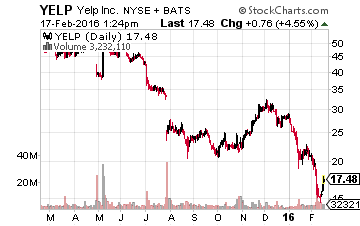 Trading at nearly 200x earnings, there’s still a lot of questions surrounding Yelp. Questions that investors aren’t waiting around to have answered as the stock keeps tumbling and has already fallen over 40% year to date.
In truth, the action at Yelp has been some of the fiercest in terms of insider sales. The sheer amount of insider sales for 2015 tops 263,000 shares versus only 7,360 shares purchased. That means insiders have dumped roughly 45% of all the shares they own. Not a big vote of confidence from management.
The major players in the C-suite, including the CEO, CFO and COO, dumped over $6.5 million in shares since mid-February, and institutions have sold almost 17 million shares since before Q4 started.
This comes as growth at Yelp is slowing, driven by a fall in monthly unique visitor growth. It’s just not finding traction internationally and still doing a poor job of getting businesses to pay to advertise. Meanwhile, it still spends a lot of money on sales and marketing efforts to generate the sales it does have. So there’s little the company can do in the interim to help cut costs.
No. 2 Stock Insiders Are Dumping: Netflix (NASDAQ: NFLX)
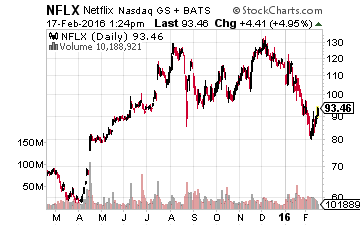 I would avoid this highflyer that did very well in 2015 but sports a sky high multiple. The equity was the best-performing stock in the S&P 500 in 2015 delivering an over 140% gain. It has captured the imagination of momentum investors as its rolls out to some 200 countries across the globe.
Insiders have sold over 900,000 shares of Netflix stock over the last six months and not one insider has stepped up to purchase a share. This stock is the poster child for irrational exuberance.
In addition, the company is facing increasing competition from YouTube and Amazon Prime; their content costs continue to march higher too. It will be hard pressed to raise prices significantly so it is hard to see how the company increases margins. At some point, any hiccup in its “story” could cause a huge drop in its stock price which has happened many times in its history as a public company.
No. 3 Stock Insiders Are Dumping: IMAX Corporation (NYSE: IMAX)
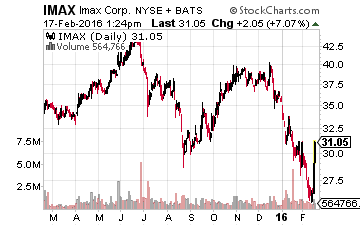 With the stock selling at levels we haven’t seen since 1997, and even then it was just for a brief few weeks, insiders are hitting the sell button. The CEO has been leading the charge in terms of insider sales, but the CFO and an EVP are also following suit. This is the smallest stock on our list with a $2.6 billion market cap, and yet, it has seen one of the highest values of shares dumped in the first 6 months of the year, coming in at over $7 million.
However, the biggest sale of the year just happened in November with one insider unloading a whopping $13.6 million of shares on the 13th.
And for good reason, IMAX appears to be hitting a saturation point. In part, because theater installments are slowing, but also because theater visits continue to be threatened by on-demand and at-home services.
Let’s not forget that much of IMAX’s business still relies on box office releases and their relative success. Finally, there’s rising competition from a similar concept by Cinemark called XD.
No. 4 Stock Insiders Are Dumping: salesforce.com (NYSE: CRM)
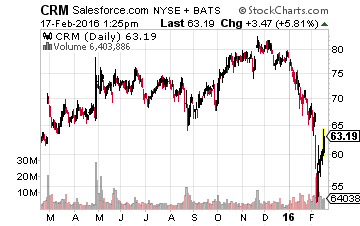 Software as a Service and cloud computing are two of the hottest buzzwords in the tech market today. That’s served salesforce.com well, until now. It’s positioned itself as the market leader. Generally a good thing, but as the leader they will soon start having a tough time finding prospective customers.
On the other hand, the likes of IBM, SAP, Microsoft and Oracle will get more aggressive in this attractive high margin business, and find it easier to snatch customers away with their deep pockets. The rise of cyber security threats also brings into question putting information in the public cloud in the first place.
Now, salesforce.com has managed to grow nicely with an aggressive acquisition strategy, something that might be tough to continue, especially as it tries to make acquisitions in non-core markets, making integration harder.
Along those lines, salesforce.com has had the likes of its CEO, President of Products and one of its co-founders dumping shares since the start of the year. Together, these guys have sold off over, $100 million in shares throughout the year and on a regular, weekly basis.
No. 5 Stock Insiders Are Dumping: ServiceNow (NYSE: NOW)
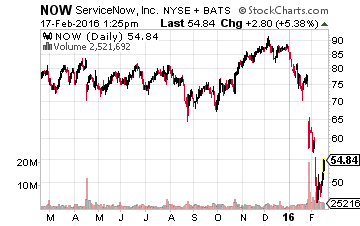 The valuation alone is enough to persuade insiders to sell. ServiceNow trades at over 15x sales and north of 150x next year’s earnings expectations. It seems insiders are starting to realize that the company may never grow into this frothy valuation.
It all started just a couple weeks ago, when the CFO, CRO (chief revenue office) and CPO (chief product officer) all started dumping shares. Cumulatively, they’ve unloaded $20 million worth of stock. Some of these guys were even able to get out when ServiceNow was hitting all-time highs above $83 in April, and now that the stock is making new highs, insiders are selling again.
Just since August, four insiders have sold a combined $51.4 million in shares.
Granted, ServiceNow has managed to grow its market share in the IT operations management industry quite nicely. It’s done so by lowering the ownership costs for customers. Yet, it’s still having issue with selling customers its higher value products like project management and job scheduling services. Have investors realized that actually generating and growing earnings will be harder than expected?
No. 6 Stock Insiders Are Dumping: Charles Schwab (NYSE: SCHW)
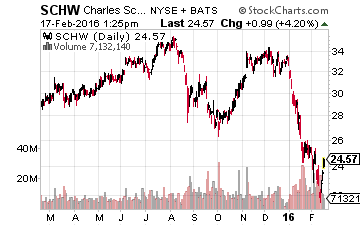 Schwab has seen its CEO and two EVPs selling shares over the last year. These guys were getting out at all-time highs near $32 a share in the beginning of the year and have cvontinued to sell throughout. Cumulatively, they’ve managed to unload over $22 million in shares. Over the same time period, very very few insiders were stepping up to buy.
Has the rapid rise of startups in the trading space convinced insiders that there’s some pain on the horizon for Schwab? This brokerage house relies on trading volumes, but the rise of alternatives, like the free trading app Robinhood, could bring into question why investors are paying close to $10 a trade. Then, there’s the rise of various roboadvisors, which could mean more asset outflows for Schwab.
No. 7 Stock Insiders Are Dumping: United Therapeutics (NASDAQ: UTHR)
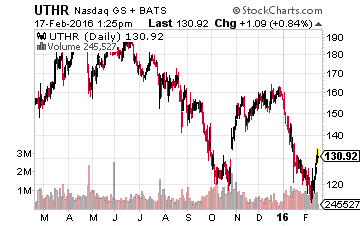 Well, it looks like investors aren’t loving all biotech stocks. Insiders have turned sour on United Therapeutics. It has two CEOs (each with the title co-CEO) and both have been actively selling over the last year. Their general counsel has also gotten in on the action. In any case, the cumulative action between the three is over $6 million in stock sales.
United Therapeutics has one key product, Remodulin, which serves a very small market. Its focus market is for those suffering from pulmonary arterial hypertension, which is less than 250,000 people worldwide.
It does have three products in total on the market, but all three have competition. Plus, it will lose patent protection for Remodulin in 2017.
It seems like every day I get an email from someone telling me which stocks to sell. Stocks like the ones we just discussed above.
I guess they’re just trying to keep us investors alert to the very real threat of certain highly touted stocks. That’s the same reason I’m sharing with you today my list of stocks to avoid.
But what should you be buying? You are buying stocks now, right?
A lot of investors have sold their positions over the past few months — many for big losses — and are sitting on cash.
That’s fine if you’re solely worried about losing money, but what about making money? Isn’t that the whole reason for investing?
Otherwise might as well put your money in a bank savings account paying 0.05% (or less!).
In response to investors complaining they only hear about stocks to sell and not enough on ones to buy, especially in this market, I’ve just recently released my top 3 buy and hold Forever Stocks for 2016.
These are solid, core holdings in my own personal portfolio and ones that you should be able to use as the foundation to a recession proof… crash proof… fool proof system for making every dollar invested work harder for you.
My favorite of the 3 Forever Stocks might surprise you.
You’ve no doubt bought something from this company but never really thought of their stock. That’s too bad because while the market was correcting in late December and early January this stock moved UP 16%.
It’s not some fly by night whiz kid tech stock with a business plan that was sketched out on a cocktail napkin or high beta biotech that might make your stomach churn.
Rather this fixture of the American economy opened its doors just a few short years before the civil war and became a publicly traded company in 1922.
It’s survived eight wars, three depressions, 24 recessions, and four panics since opening its doors and today is considered by many as best in class in its sector.
Plus it’s paying a 4% dividend yield while we wait for either one of two catalysts to propel the stock price even higher.
I’ve just released a report on this company that explains in detail how these catalysts have already kept the Forever Stock‘s price moving upward even as the broader markets whipsaw on a daily basis. Plus how one in particular will be a game changer that could double the stock price before the end of the year.
And as a bonus there are two other stocks in my new report you’ll want to seriously look at right now. They’re what I call Forever Stocks because once you buy them you’re going to want to keep them for a very, very long time.